Birtles Publishing, 2026
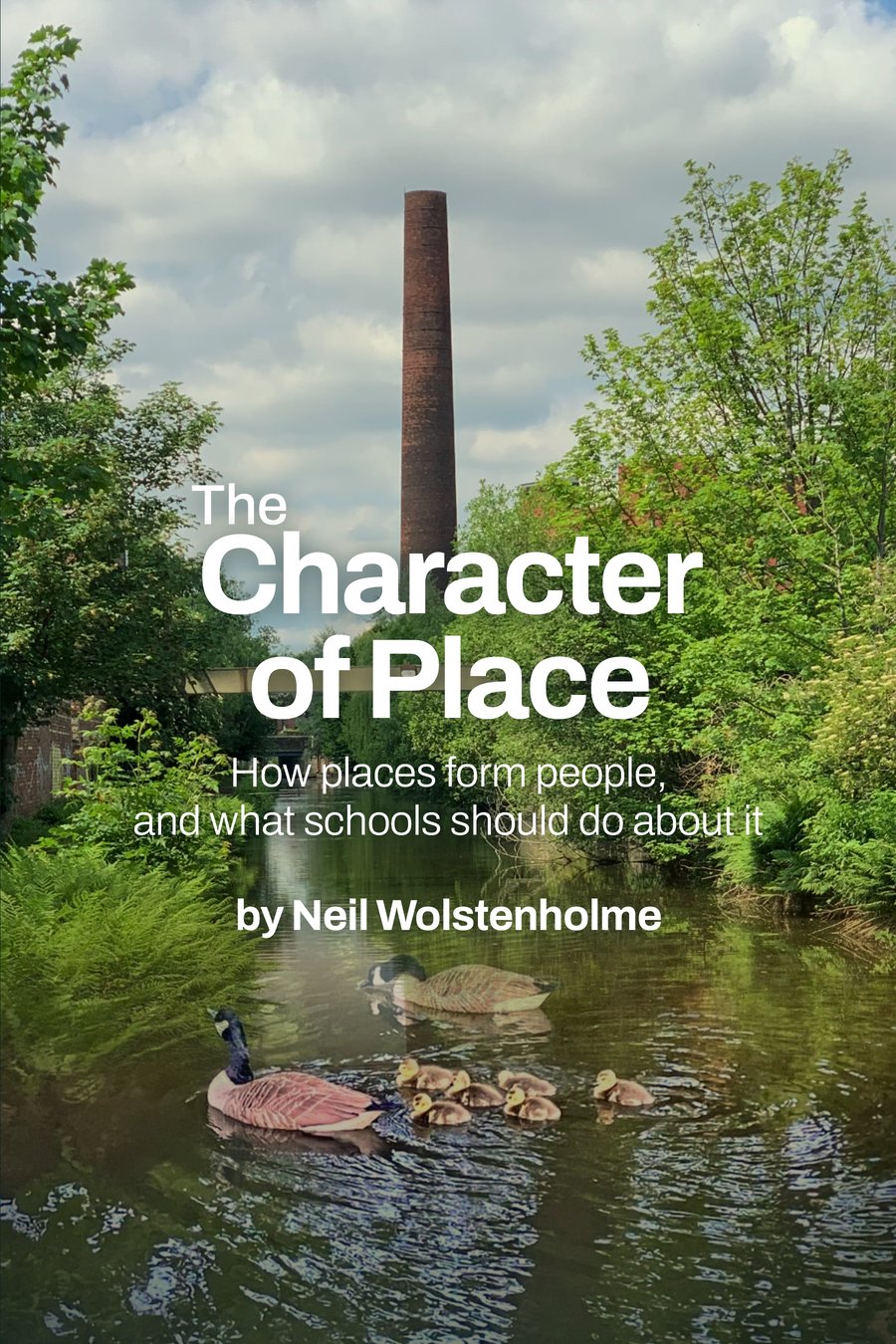
The Character of Place
How places form people, and what schools should do about it
A new book by Neil Wolstenholme, chair of Kloodle, on the oldest question in education and the one the system stopped asking: not what a young person can do, but who they are becoming.
Character is the imprint of the place that makes us.
Where the word comes from
The word ‘character’ in English derives from the Greek kharaktēr, literally meaning an engraved mark; the impression left by a stamping tool on metal, stone or wax.
Neil Wolstenholme The Character of Place
A mark pressed so deep it becomes part of the substance. Places do the engraving: homes, streets, teams, corridors, classrooms. Schools do more of it than anyone. The argument of this book is that the marks are real, that they can be seen, and that a school which takes responsibility for what it is engraving is doing the most important work it will ever do.
Nobody stands up at a funeral and reads out exam results.
Neil Wolstenholme The Character of Place
The argument
Four ideas the book builds on.
Rooted in Aristotle, tested against the modern evidence base, and worked through in one real city. The book is written for headteachers, trust leaders and anyone who has ever suspected that the things which matter most about a school are the things it cannot show.
Character is formed, not taught
It grows through habit and practice, in the company of other people, long before anyone names it. A weekly lesson on values will not do it. The whole place teaches, all of the time.
Place does the forming
Character is formed in particular places, by particular people, over time. Every town has its own history, its own exemplars and its own complications, and those shape the young people who grow up in it.
The system cannot see it
Attainment is measured to three decimal places. Formation is invisible. Every school which takes character seriously does a great deal of work that the measures have no way of recognising.
So capture it, do not count it
The answer is not another metric. It is a record: a longitudinal account of becoming, built from what a young person actually did, kept by the young person themselves.
Inside the book
Three parts, one argument.
Part one
The foundations
Five ordinary scenes in which nobody is watching, and what they have in common. Where the idea of character comes from, why the school system lost sight of it, and the case that it is formed in particular places rather than in the abstract.
Part two
A place based approach
Manchester as the worked example. What it looks like when a city takes the character of its own place seriously, and what schools within it can do on a Monday morning rather than in a five year strategy.
Part three
Character in action and debate
The argument taken out into the world: what other countries do, where the criticisms land, why the system keeps losing character, and the pact a place would have to make to hold on to it.
In the author's words
Lines from the book.
Character is who you are when no one is watching.
Neil Wolstenholme The Character of Place
We become, in part, the places which made us.
Neil Wolstenholme The Character of Place
A skill is something you can do; character is something you are.
Neil Wolstenholme The Character of Place
The test is not what a school teaches, but what it rewards.
Neil Wolstenholme The Character of Place
We have become very good at measuring attainment and strangely unable to see character.
Neil Wolstenholme The Character of Place
Qualifications might help you make a good living, but it is character which helps you make a good life.
Neil Wolstenholme The Character of Place
We have built an education system that is brilliant at sorting young people by academic ability and poor at equipping them for adult life.
Alan Milburn
What the school is building, in effect, is a longitudinal record of becoming.
Neil Wolstenholme The Character of Place
Not to count character but to capture it.
Neil Wolstenholme The Character of Place
These lines also appear quietly in the margins of Kloodle Hub itself, where staff and learners meet them while they work.
From the argument to the evidence
The book is the why. Kloodle Hub is the how.
Schools form character whether they mean to or not. Kloodle Hub is how a setting does it on purpose and then shows the work: activities logged as they happen, reflection in the young person's own words, skills built from real evidence, and a record that follows them out of the gates. Formation the exam system cannot see, made visible.
Register your interest
Be told the moment it is out.
Leave your details and we will email you when The Character of Place is published, along with the first chapter to read in the meantime. No list, no marketing, one email.